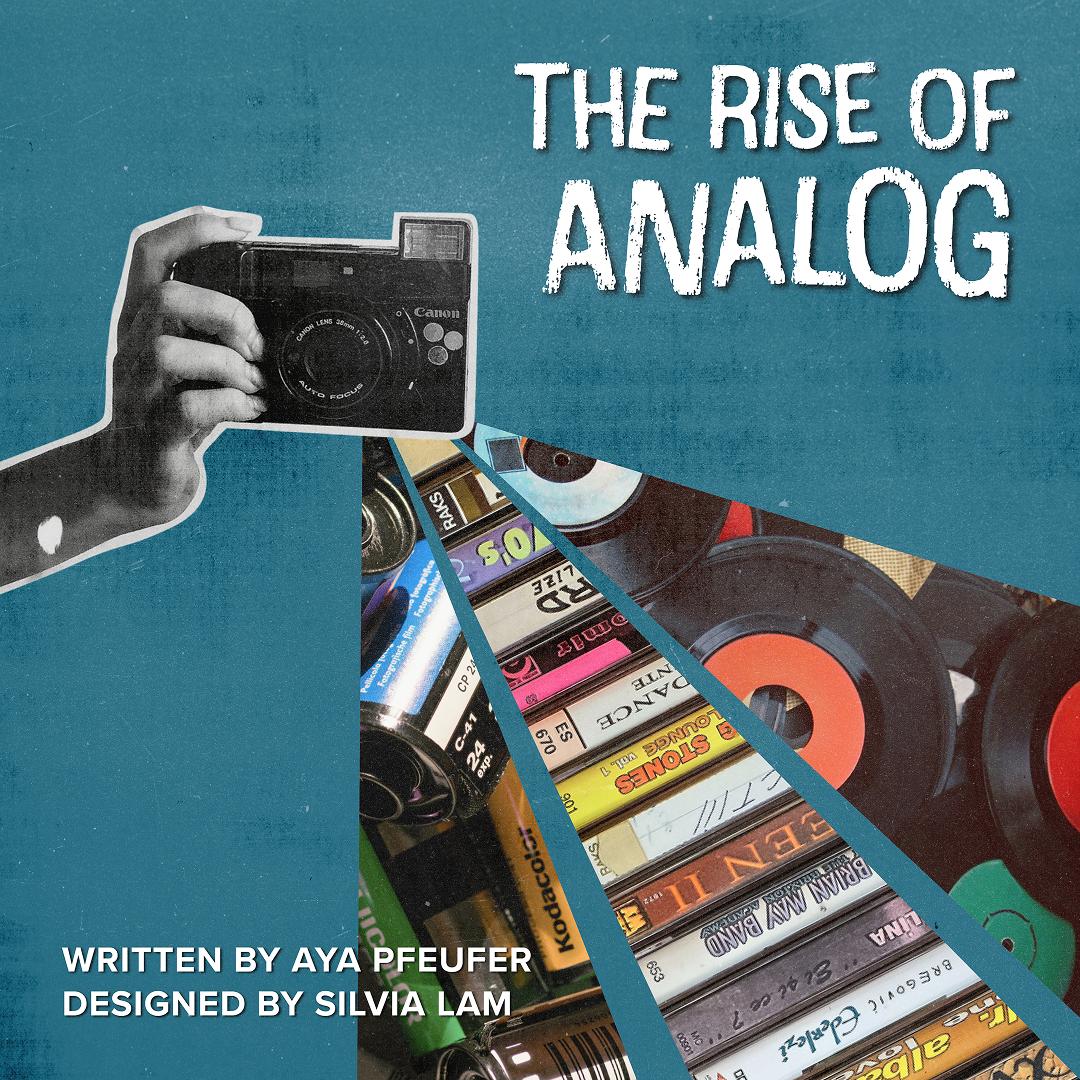

Image from Title Mag
In a culture defined by algorithms, streaming and constantly consuming media, an analog counter-movement is slowly gaining more popularity. More individuals have been calling 2026 the return of analog. Analog media is physical and more hands-on, and analog living encourages living offline. This revival is seen in various areas of our lives, such as film, music, and photography. As our society is overwhelmed by digital consumption and overload, leading to fatigue — or as Gen Z and Gen Alpha would describe, “brain rot” — the rise of analog media is rather nostalgic and can engage our senses more. Screens are a part of our everyday lives, and the endless scrolling and notifications start to become hollow.
The analog revival stems from people wanting to be more active consumers of media, embracing and even seeking out more tangible experiences. Digital forms of media can sometimes feel impalpable. We miss holding objects, like physical books, and instead read off a screen. Analog media can help increase mindfulness, retention and reduce chronic stress.
Vinyl records, once replaced by CDs in the late 1980s, have increased in sales. More music listeners have been purchasing vinyl records, which were thought to be outdated, but are now seen as a trendy item to have in one’s music collection, mainly due to Gen Z redefining vinyl in the modern era.
Analag photography has also grown in popularity. The digitalization of media has made photography more accessible, enabling more people to take high-quality pictures through editing and photo adjustments. Nevertheless, many are embracing film and vintage styling, and have drawn inspiration from 90s influences. Film photography captures more depth and texture than digital photography, which may be difficult to replicate.
The compelling nature of film tends to lie in its emotional authenticity, enhancing the scene’s depth. Film is particular in the way it uses tone and cinematic elements to trigger nostalgia in viewers, which is rooted in a longing for the past.
Additionally, more people are buying digital cameras rather than solely relying on their phones to take pictures. It has become more popular again, mainly because people prefer it, or simply because they gravitate towards the vibe of images with fewer pixels and of lower quality. Photographers appreciate the process of taking a photo and sometimes the patience it requires; however, with phones, we are now wired for instant gratification. Other activities that are gaining momentum include artistic practices such as art, craft and painting. Rediscovering oils, and tools like paints and brushes, allows us to have a more engaged and tactile approach to creativity.
Another reason for the rise of analog living is due to the increased awareness of wellness and mental health, more individuals are going on a ‘digital detox,’ to break away from their screens. Through partaking in analog activities, we can perhaps immerse ourselves more in the moment, slow down, and take a step back from the high volume and speed of digital media consumption. In 2026, it will be the year we go more analog and offline, and discover or rediscover new hobbies.