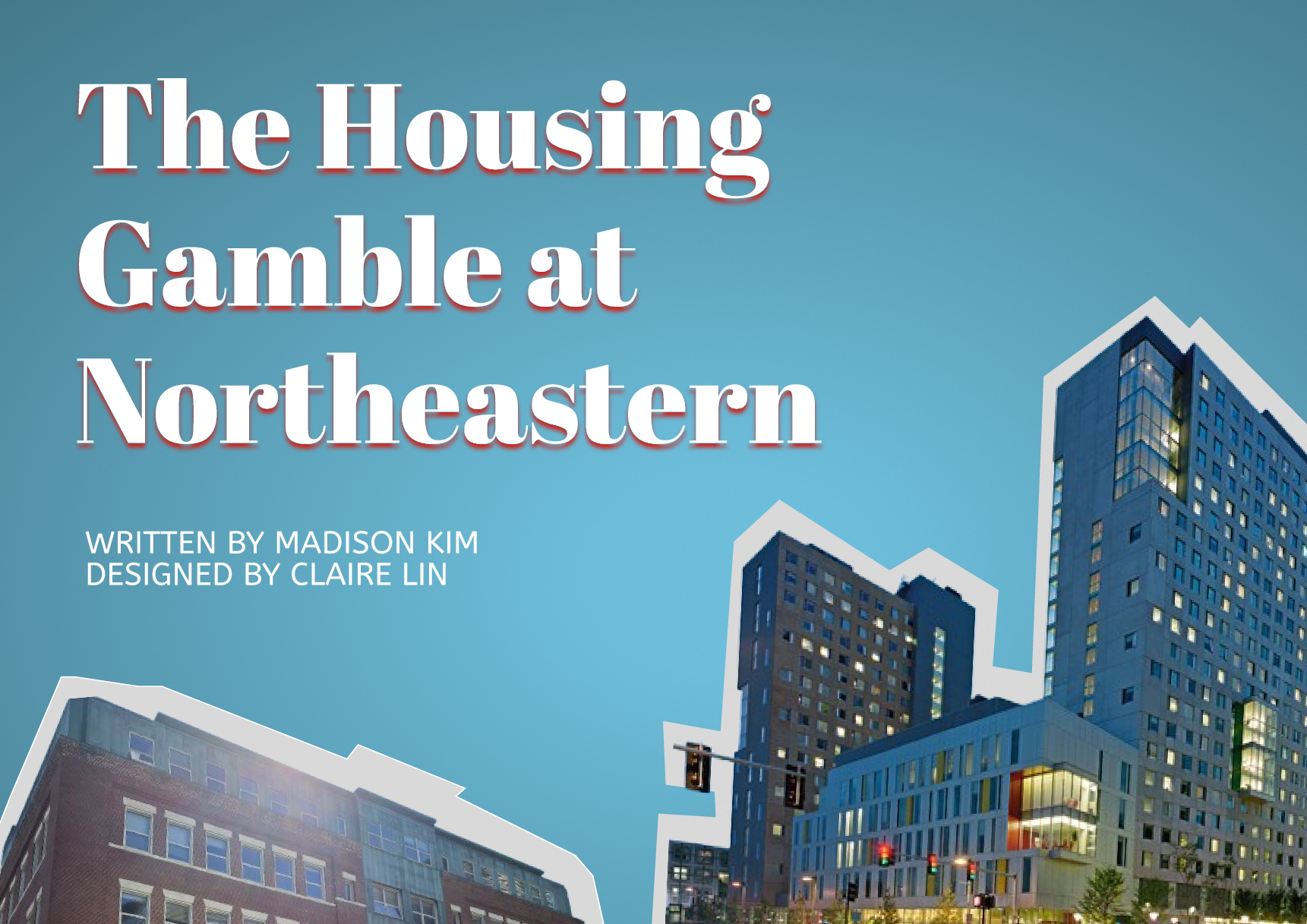
Everyone knows that if you’re looking for a good co-op, Northeastern University is the way to go. But is that one-of-a-kind opportunity worth the headache of the infamously complicated housing system? Your first year won’t be affected by this because you’ll be guaranteed a standard dorm with no lottery, but look ahead to your second year and think again. Believe it or not, a $95 difference per semester can determine whether you get a fully functional kitchen or no cooking space at all, according to Northeastern’s 2025–2026 Upperclassmen Housing Rates chart. And the worst part? You may have no control over which one you get.
There are three cost tiers — economy, standard and enhanced — that students can “choose” from, but the lottery system ultimately decides where they end up. And here’s the catch: those labels don’t always line up with reality; sometimes “enhanced” housing is more of a downgrade (based on data from Northeastern University Housing 2025–2026 Rates Chart). This inevitably creates clear “winners” and “losers.” The problem? The quality differences within the same tier — and even across tiers — are wildly disproportionate, sometimes laughably so.
Case Study: 780 Columbus
Take 780 Columbus Ave, a standard apartment-style dorm. If you’re lucky enough to land here, it feels like you’ve hit the jackpot. This setup comes with a private bathroom, a full kitchen with a large fridge, a small but separate living room with two lounge chairs (a bit on the ugly side, but functional enough), a coffee table and a dining table with three chairs. Natural light pours in through oversized windows in the living room and bedroom — residents can open them to let in a fresh autumn breeze, making the place feel even more spacious.
The double bedroom includes elevated beds, two desks with storage, two closets and dressers underneath the bed. There’s even an automatically locking door for added privacy. In my case, it’s just my roommate and me — though other on-campus apartments can house more or less students depending on the layout. Add to that the convenience of being a five-minute walk from International Village’s dining hall and nearby food spots, like Bangkok Pinto and Juicy Greens, and you’ve got one of the most coveted setups on campus. The only real downside might be the 12 minute walk to Marino Recreation Center, but IV dining’s proximity makes it a tradeoff most students don’t mind.
Case Study: International Village
Now contrast that with International Village (IV) — technically an enhanced semi-private suite with double rooms like 780 Columbus, supposedly a tier above it. The irony? The square footage is drastically smaller. The room features bunk beds, one built-in closet and one freestanding wooden dresser, crammed beside two desks with hutches. The suites don’t include a mini-fridge or microwave, so residents have to rent those separately. Four students share a single bathroom (two doubles connected), and the awkward window setup (a large fixed pane and a skinny sliver that barely opens) does little to help. To make matters worse, the long, narrow layout leaves only about two feet of space between the desks and beds. The dim lighting makes the space feel even more claustrophobic. According to The Huntington News, double rooms in IV average around 90–95 square feet per person, while singles range from 130–150. The university doesn’t list comparable data for 780 Columbus, but the difference in usable space is obvious even without exact numbers.
There are upsides, of course. The building has its own gym and dining hall attached, which is undeniably convenient. But for some students, this convenience turns into isolation — they rarely have a reason to leave IV, and the dorm can start to feel like a trap.
The Bigger Picture
These two dorms spotlight not just the lottery’s uncertainty, but also the deeper issue of Northeastern’s misleading housing tiers. 780 Columbus is labeled as “standard,” while IV is considered “enhanced,” yet it’s $95 cheaper per semester and offers a dramatically worse living experience. Enhanced? Hardly. Northeastern housing, like private university housing more broadly, really is a gamble.
What I’ve laid out is just one comparison among many possible ones — but it shows how drastically your college living situation can vary depending on the luck of a lottery number. And sometimes, it isn’t even luck; it’s the university’s own tier labels that give students the false impression that paying more will guarantee something better. For some students, their entire guaranteed housing experience might be spent in one of the “short straw” dorms, with no way to change it.
The housing lottery reflects a larger truth about Boston’s housing market: high prices are everywhere, but uneven returns on what you pay. If you’re a Northeastern student — or planning to be one — it’s worth taking a closer look at the housing system before you pick your tier, because understanding the gamble can make all the difference.