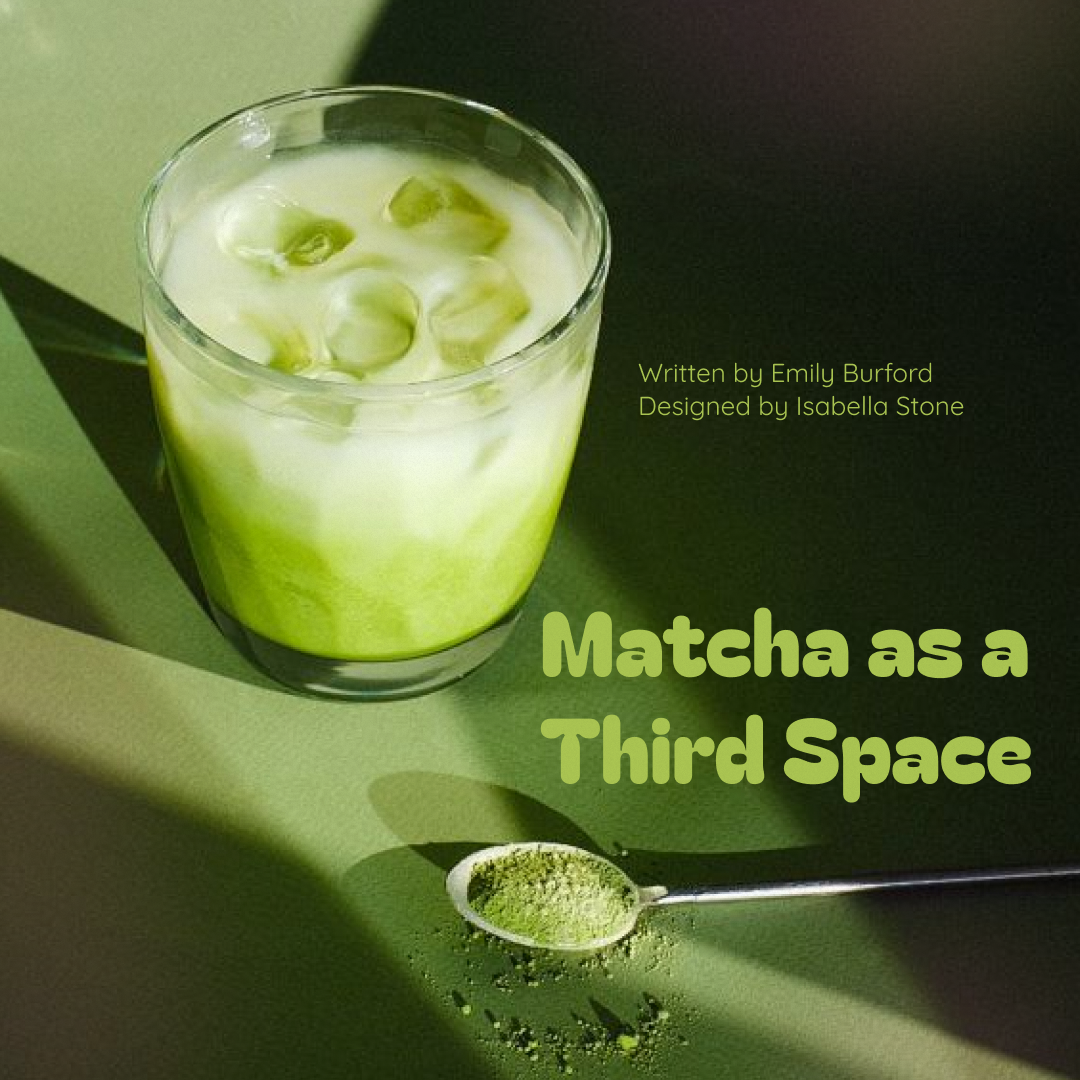
Matcha has become a third space. I realized this standing in a line wrapped down the street for popular coffee chain, Blank Street, last month. I waited a whole hour and 20 minutes before matcha even made it into my hand. It is fair to assume that with this horrific wait time, everyone would be rolling their eyes, pacing back and forth, waiting impatiently for their turn to order. However, it proved to be quite the opposite; it was fun. Lots of young women were wide-eyed, smiling and laughing with their friends in line. They planned for this long wait, and they were ready to revel in it.
Inside, I glanced over to see more than 20 cups of matcha sitting on the pickup counter. Two girls in front of me were discussing how Blank Street sold out of matcha one afternoon last week, and feared it would happen again today. No wonder there is a matcha shortage; Americans are consuming matcha in mass proportions — from matcha flavored whipped cream, pastries, chocolates and beverages like these, matcha has become a competitive source to capitalize on.
Outside of the cultural implications seen at face value, this disproportionate consumption of matcha makes it clear that as a generation, we are missing something fundamental: third spaces.
Most of us are not grossly materialistic or blindly indulging in a trend — we are looking for a sense of community and don’t know how to find it. Spend the six to eight dollars on matcha, and you’re in. It’s affordable enough to sustain and it’s reliable, so when you pitch the activity of heading somewhere for matcha to your friends, odds are they’ll say yes. Not only is it fun to try new flavors, but it is also a designated place for you and your friends to sit, drink and chat; a luxury not easily afforded these days. Matcha has become the hangout, though the pressure is also low enough that you can do it on your own. If you’re out on a walk or need a place to study, you return to these matcha-filled spaces for a sense of community.
While this idea is not new — it’s been done with coffee shops and other drink flavors — matcha has opened a new door. Coffee is popular amongst all generations; when walking into a cafe, you can expect to see a diversity of ages, ranging from your typical college student to an older elderly couple enjoying their afternoon, but when walking into a matcha establishment, the age diversity disappears. Matcha has become a third space for young people to congregate in — young people finding other young people. Fostering a sense of camaraderie during the current political climate that works so hard to divide and isolate us, it is more important than ever that young people have somewhere exclusively theirs, where they can be face-to-face.
Unfortunately, as with all likings that young women and girls take to, the same stereotype has been cast to those who drink matcha: basic, inauthentic, uninteresting. This criticism emerges along with the idea that matcha has come to be seen as inherently girlish. It is no coincidence that the dismissal of matcha mirrors the broader pattern of shaming young women’s likings, reducing it to something shallow or unserious.
But the reality is, dismissing matcha means dismissing the spaces young women build for themselves — spaces this culture desperately needs. Matcha has become a third space and that is no frivolous thing.