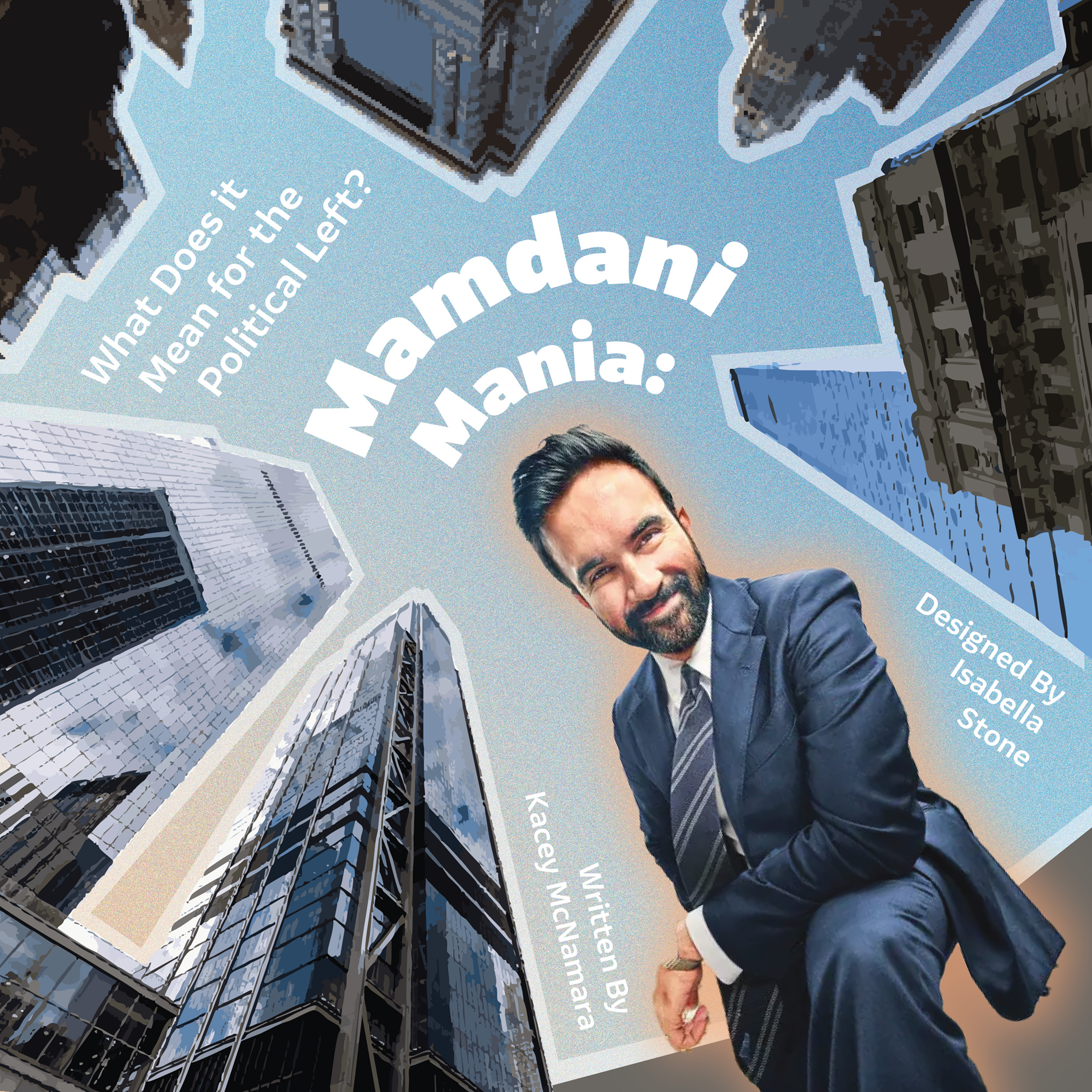
In June 2025, those with an interest in politics across the United States watched one peculiar election with baited breath — and were even more surprised by its result. New York City’s Democratic mayoral primary was being held. In previous months, one candidate had taken the internet by storm and captured the attention of New Yorkers young and old with his bold platform and dedication to reaching out directly to the city’s residents.
Zohran Mamdani, a self-described democratic socialist, won the primary election. A relative unknown when he announced his candidacy in October of 2024, Mamdani was able to galvanize voters enough to defeat former governor of New York Andrew Cuomo, whose campaign was funded by the largest super PAC a New York City mayoral election had ever seen. Mamdani’s victory has made waves not only in New York but across the country as those across the political spectrum ask: Who is Zohran Mamdani? Why was he so successful? What does this mean for the future of American politics?
While it might sound obvious at first, the key to Mamdani’s success has been his platform. At a time when it seems that most Democratic politicians are running on “not being Republicans” — see Kamala Harris’ presidential campaign slogan of “We’re Not Going Back” — and refusing to listen to voters, Zohran Mamdani made a name for himself by offering simple, popular solutions for some of the issues that most touch the lives of ordinary, working-class New Yorkers. His promises to freeze rent for residents across the boroughs, eliminate bus fares and implement free, universal childcare have thrilled voters, especially young people across class and racial lines.
One of the most commented-on aspects of Mamdani’s campaign is his impeccable social media presence, characterized by snappy, short videos filled with flair (Mamdani’s mother is a respected filmmaker, and it’s not improbable that he picked up some knowledge from her, in addition to having an excellent team). Less appreciated and yet possibly even more important though, is Mamdani’s willingness to back this up by putting in work on the streets of New York. Seemingly every other post on his social media accounts is a recap of him attending an event somewhere in the city, or simply spending time outside, talking to locals about the changes they want to see in their city and their opinions on his policies. A publicity event where Mamdani walked the entire length of Manhattan attracted swathes of supporters, not only through watching social media updates but in physical interaction.
Mamdani’s dedication to in-person interaction shines through in his approach to his own volunteers and voters as well. The ZetroCard, a punch card encouraging people to canvass a certain amount of times to earn a free tote bag, has been wildly successful within the community of his supporters to mobilize individuals and introduce a sense of whimsy to the political process. In August, Mamdani announced on social media that he would be holding a scavenger hunt across New York City the following day. The 500 prepared participant cards were gone within the first 15 minutes of the hunt, according to the campaign. The only prize for completing the multi-hour hunt was a photograph with Mamdani and a cup of chai. The game’s appeal, evidently, was not any prize, but simply the invitation to get to know and appreciate New York a little deeper, potentially making some friends along the way.
A final crucial piece of Mamdani’s campaign to consider is the context from which his campaign arose, or rather, the people behind him. Mamdani has been a member of the Democratic Socialists of America since 2017, and his endorsement by DSA contributed heavily to his election to the State Assembly in 2020. Since his election, he has served as a part of a DSA voting bloc that works even more closely with residents than is typical of a caucus to bring about the changes that his constituents want to see. Some of his largest accomplishments include implementing a pilot program to make one bus line in each borough free and participation in a hunger strike that successfully brought debt relief to taxi drivers in the city.
As Mamdani’s success so far creates shockwaves, backlash to his bold policies is inevitable. At the same time, his campaign is viable to bring more attention to DSA and the local candidates across the country it endorses, all while galvanizing more politically-minded individuals to follow a similar path. Across the political spectrum, one thing has become abundantly clear: for this generation’s progressives, running on the status quo will no longer be enough.